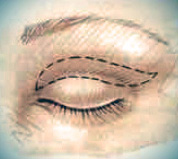
Aesthetic eyelid surgery is routinely performed on adults of
all ages. Some people have eyelid surgery to correct problems that are
a result of aging, while others have inherited traits that require
correction. In addition, eyelid surgery is performed on young children
who are unable to open their eyes adequately (eyelid ptosis).
Eyelid surgery helps to rejuvenate the face by taking away the tired
and baggy look. Although you don’t feel tired all the time you may be
told that you look tired. The freshened appearance that a
blepharoplasty may bring to your face is quite
remarkable.
Medical conditions may result in eyelid problems and we should discuss
these at length. High blood pressure, thyroid problems or
diabetes are among the medical conditions that may increase the risks
associated with eyelid surgery.
Other important information required includes:
Previous ophthalmologic abnormalities
and previous consults
Eye irritants and allergies
Recurrent bouts of conjunctivitis
(possible eye exposure during the night, or exposure to irritants in
the environment)
Dry eyes (important)
Use of contact lenses or if you have
cataracts
Facial nerve disorders
History of other diseases such as
Graves disease, diabetes mellitus, glaucoma, thyroid disease, renal
disease, cardiovascular isease and liver disease
Bleeding tendencies and the use of
certain medication that can increase bleeding such as aspirin
Previous eyelid trauma or surgery
Medications taken including topical
eye-drops and ointments
In some cases it is important to have an ophthalmological consultation
prior to surgery.
INDICATIONS
Any one or combination of the following conditions may indicate that
you are a good candidate for eyelid surgery:
excess skin obscuring the natural fold
of the upper eyelids
loose skin hanging down from the upper
eyelids, perhaps impairing vision
a puffy appearance to the upper
eyelids, making the eyes look tired
excess skin and fine wrinkles of the
lower eyelids
Aesthetic eyelid surgery can usually correct these problems, though
other treatments may also need to be considered. For example, if the
upper eyelid condition is accompanied by sagging of the eyebrows, then
a forehead lift may be recommended. Smoothing of crow's feet may
require chemical peeling or Botox injection. Fillers may also
compliment the procedure
PROCEDURE
Not everyone will need the same procedure and get the same results as
there are many individual factors involved.
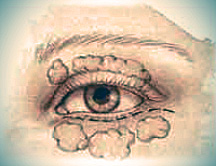 For the upper
eyelid, an incision is made within the upper eyelid
crease which extends beyond the outside corner of the eye into the
laugh lines (crows feet). Through this incision, excess skin and fat
are removed. This will rejuvenate the look of the upper eyelid. The
incision is then sutured and the sutures will need to be removed after
several days.
For the upper
eyelid, an incision is made within the upper eyelid
crease which extends beyond the outside corner of the eye into the
laugh lines (crows feet). Through this incision, excess skin and fat
are removed. This will rejuvenate the look of the upper eyelid. The
incision is then sutured and the sutures will need to be removed after
several days.
For lower eyelid surgery, often an incision is hidden just below the
lower lashes. Through this incision, excess skin, muscle and fat are
removed or redistributed. Often times, a slight hitch of the lower
eyelid muscle is required to address muscle laxity.
After the surgery you will be monitored for a few hours and possibly go
home the same day of surgery but it is not uncommon to stay overnight
for additional monitoring if required. Your vision will be blurry as a
result of the ointments that are placed into your eyes for comfort.
There may be some oozing of blood through the incisions which is
expected and normal after this procedure.
Swelling and bruising of the eyes will occur a few hours after surgery
and will worsen over the next 48 hours. The swelling will start
improving on the third day after surgery in most cases. The amount of
time it takes for recovery varies greatly among different individuals.
In the first day or two you should rest quietly with your head
elevated. You should apply cold compresses to your eyelids with cotton
wool soaked in ice water. Do not place ice directly onto your eyelids.
Remember, you must not take aspirin or certain anti-inflammatory
medications.
The eyes may feel tight initially but this improves with time. Bruising
and swelling typically disappears within seven to ten days. After the
first week you will be permitted to use makeup, if desired, to conceal
any discoloration.
Your eyes may be sensitive to light, and you may experience tearing or
dryness of the eyes. These symptoms are not uncommon and they resolve
in several days after the surgery.
You will be able to resume most of your normal duties and activities
within ten days or less. Contact lenses should be avoided for at least
10 days after the surgery.
Aesthetic eyelid surgery has the effect of making you look
more rested, refreshed and alert. Incisions will fade over a number of
weeks until they become barely visible. Because the scars are generally
not visible and the results are very refreshing, eyelid surgery is very
popular and rewarding. You may also benefit from additional minor
procedures such as Botox and Restylane fillers to optimise the
procedure.
DISADVANTAGES /
COMPLICATIONS
Fortunately, significant complications from aesthetic eyelid
surgery
are infrequent. Every year, many thousands of people undergo successful
eyelid surgery, experience no major problems and are pleased with the
results. It is however important that every surgical procedure has
risks.
Some of the potential complications that may be discussed with you
include:
Haematoma (an accumulation of blood
under the skin that may require removal),
Infection
Reactions to anaesthesia.
Feeling of dryness or irritation in the
eyes which may progress to dry eye syndrome that requires treatment
Possibility of a temporary decrease in
sensation of the eyelid skin or impaired eyelid function that sometimes
may need to be corrected by additional surgery
Loss of vision and blindness is the
most dreaded complication (occurs in 0.04% of cases)
Retrobulbar haematoma
Corneal injury (scratch on the eye
membrane which could become opaque and obscure vision)
Diplopia (double vision but is usually
temporary)
Temporary diplopia can occur secondary
to oedema and haematoma
Permanent sterabismus can result from
injury to the extraocular muscles or nerves
Inferior oblique most frequently injured
Treated conservatively until no further
improvement occurs. Refractory cases can be referred for appropriate
strabismus surgery.
Wound dehiscence
Epiphora (excessive tearing which
usually goes away in a few weeks)
Lower lid hyperpigmentation
Hollow lower eyelids
Eyelid ptosis (inability to open upper
eyelids properly and may require further surgery)
Prolonged swelling
Ectropion (eversion of the eyelid
margin)
These complications are very rare but it is important for you to be
completely informed about your operation. The results of aesthetic
eyelid surgery are long-lasting, but they may be affected by your
heredity and lifestyle factors. It is however a very rewarding
procedure and the rejuvenation that it brings to the eyes makes you
look less tired and younger.
.