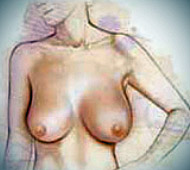
Patients who undergo breast reduction surgery are most commonly having physical symptoms which make them uncomfortable. Breast reduction usually can solve these problems as well as improve the size and shape of your breasts. In most situations, breast reduction will allow for better fitting clothes and a more proportional look to the rest of the body.
Breast reduction can be performed at any age, but I recommend waiting until breast development has stopped. Childbirth and breast-feeding may have significant and unpredictable effects on the size and shape of your breasts. Nevertheless, many women decide to undergo breast reduction before having children and feel that they can address any subsequent changes later.
It is important to discuss all breast diseases that you may have had yourself as well as in your family. Your past medical history is also important. Smoking increases the risk of a poor outcome to your surgery and it is important to stop at least 6 weeks prior to your operation.
INDICATIONS
For such an operation to be a success, it is important that it be performed on good candidates that will benefit from the operation. You may be a good candidate for breast reduction if you have one or more of the following conditions:
- breasts that are too large in proportion to your body frame
- heavy, pendulous breasts with nipples and areolas that point downward
- one breast is much larger than the other
- back, neck or shoulder pain caused by the weight of your breasts
- skin irritation beneath your breasts
- indentations in your shoulders from tight bra straps
- restriction of physical activity due to the size and weight of your breasts
- dissatisfaction or self-consciousness about the largeness of your breasts
PROCEDURE
Individual factors and personal preferences will determine the specific technique selected to reduce the size of your breasts.
The most common method of reducing the breasts involves three incisions. One incision is made around the areola (dark skin around nipple). Another runs vertically from the bottom edge of the areola to the crease underneath the breast. The third incision follows the natural curve of the breast crease. There are other techniques which can be performed with less scarring but not everybody is a candidate for such procedures.
The nipples are moved to a higher position, and the areola is reduced in size in most cases.
The day after surgery, you will be encouraged to get out of bed for short periods of time. After several days, you will be able to move about more comfortably.
When you wake up after the surgery, you will have surgical drains exiting from the side of the breast. These will be removed a day or two after surgery, at which time your dressings may also be changed or removed. You will be instructed to wear a support bra for about 6 weeks during which time the swelling and discolouration (bruising) will diminish. It is not uncommon to feel less sensation in the nipple and areola areas for several weeks after the operation but it usually recovers to a large degree. Your breasts may also require some time to assume a more natural shape (the bottom end of the breast is often flattened after surgery and this takes time to correct itself).
After breast reduction surgery, it is often possible to return to work within just a couple of weeks, depending on your job. In many instances, you can resume most of your normal activities, including some form of mild exercise, after several weeks. You may continue to experience some mild, periodic discomfort during this time, but such feelings are normal. Severe pain should be reported to your doctor. Any sexual activity should be avoided for a minimum of one week.
DISADVANTAGES / COMPLICATIONS
Significant complications are rare. Anyone considering surgery, however, should be aware of both the benefits and the risks.
Some of the potential complications that may be discussed with you include:
- bleeding and haematomas (blood collections) which may require surgical drainage
- infection
- reactions to anesthesia
- asymmetry of breasts
- Asymmetry of the nipple height or size
- loss of sensation in the nipples or breasts may occur
- poor scars due to breakdown of wounds
- nipple and/or areola loss which may require further reconstructive surgery
- skin necrosis
- fat necrosis
- may not be able to breast feed normally
- recurrent hypertrophy
ADVANTAGES
Breast reduction surgery will make your breasts smaller and firmer. Without the excessive weight of large breasts, you may find greater enjoyment in playing sports and engaging in physical activity. You will generally feel more comfortable and clothing will no longer be a bother to find. The incisions from your breast reduction surgery will heal and fade over time. It is important to realize, however, that the incision lines will be permanently visible, more so in some individuals than others. Fortunately, the incisions for breast reduction are in locations easily concealed by clothing. Breast reduction often makes a dramatic change in your appearance. For this reason, it may take some time to adjust to your new body image. Most women, however, eventually become comfortable with their smaller breasts and feel very pleased with the results.